Some folks may well consider I am insane for waking up at 4:45 AM on a Sunday early morning to tour a airplane, but you would too if you obtained a chance to tour flip cusion your bed hvy camera 94185 NASA’s supercool P-3B’s Airborne Laboratory. And I suggest that actually with the bad pun supposed. As component of Procedure IceBridge, this aircraft is loaded with an practically obscene variety of devices and a mess of researchers to evaluate and map ice more than the Arctic and Antarctic. For 6-weeks this spring, the P-3B will fly above sea ice, glaciers and ice sheets in the Arctic to figure out how significantly these various kinds of ice are altering. The data collected will be virtually bridging the gap in ice info in between the retirement of the ICESat satellite in 2010 and the launching of ICESat-two in 2016.
You may well be questioning why an oceanographer is so excited about an aerial ice mapper? Simply because about twelve% of the world’s oceans are coated in the stuff! Sea ice has an effect on currents, local weather, charismatic mega fauna, little sea beasties and even interior waves! So now let me rely the causes why the NASA P-3B is the da bomb.

NASA P-3B ahead of dawn.
 1) The devices that make the science come about.
Did I mention there is TON of science gear on this plane? Effectively there is. And all of it is remarkable.
LIDAR AND RADAR: This is a aircraft with frickin’ lasers and radars on its tummy! LIDAR lasers evaluate the top of snow on the floor, even though the lengthier wavelength RADAR penetrates beneath the snow to evaluate the ice and terrain beneath. By combining the two measurements, a band of snow and ice thickness is mapped along the flight path, revealing all itty bitty bumps as modest as 4 cm substantial!

LIDAR imaging Glaciers in Antarctica? Yes remember to! (graphic by way of NASA)
Â
THE MEGA-Camera: Technically, it is referred to as a Digital Mapping Method. But truly it’s a giant digital camera that requires gazillions of 20 MegaPixel images while the airplane is flying lower. All the pictures are stitched jointly by means of pcs to make wonderful panoramas. Even a lot more awesome the images overlap each and every other which indicates they merged to get three-dimensional stereographic ice maps. Whoa.

Sticking jointly photographs to make an awesome sea ice mosaic! (image through NASA)
Extravagant GPS: You cannot make an awesome map if you really do not know in which you are dude. Also, if you are lost, pinnipeds are horrible at giving instructions.
GRAVIMETER: I confess it. This instrument wasn’t really on the aircraft when I got on. However, I adore it just for its knowledge. By detecting little changes in gravity researchers can decide what lies beneath the ice. This could be seawater below the edge of a glacier or even far more seaworthy, bathymetry under ice! And we oceanographers heart each and every opportunity for MOAR BATHYMETRY!

Ice scientists making ready to Ice science.
2.) It is created like a tank!Â
This prop aircraft, which is virtually fifty many years old, is a beast. And that is a good issue. Turbulence doesn’t knock it close to as a lot as smaller sized planes, generating it a reasonably steady system ideal for airborne ice mapping whilst traveling only 1500 ft earlier mentioned the ground.

Can any individual uncover the eject button?
3) Carefully prepared spontaneity.
Just before this aircraft gets everywhere near ice, the science crew already has dozens of possible flight strategies picked out. But which path the P-3 in fact will take is in fact determined that morning. Why? Due to the fact to get good ice info the weather conditions has to cooperate. And so every early morning forecasts are checked, routes are studied and the optimal route for amazing data is made the decision. Even flight strategies can be altered by the weather. The day just before the aircraft got below, it decided to spend an extra day in Greenland to consider advantage of wonderful weather there, and the bad temperature in Fairbanks. NASA, you are seriously traveling by the seat of your ice chilly trousers.
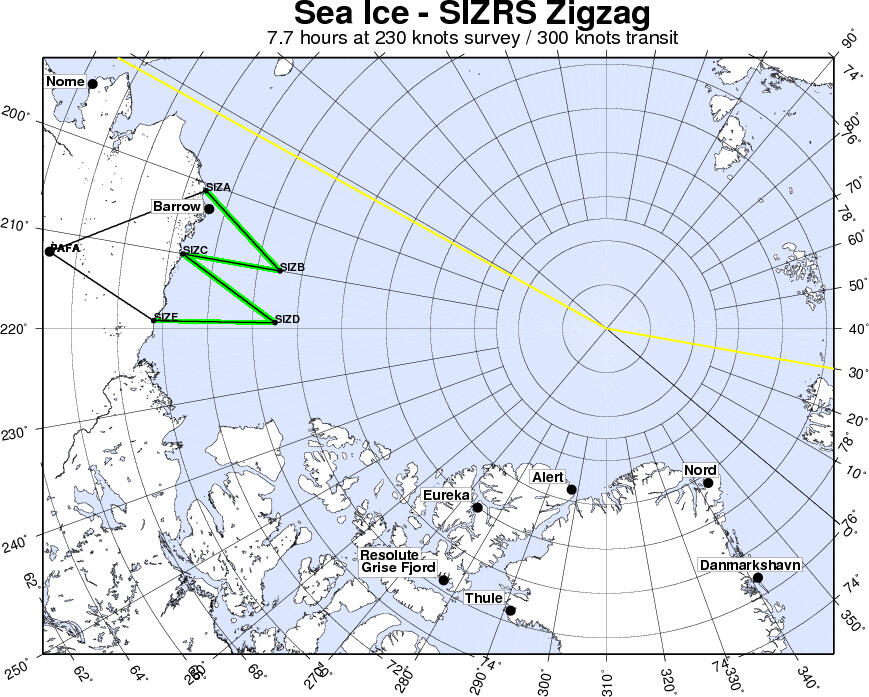
Right after I received off, the P-three flew north and out in excess of the Beaufort Sea. Cheers to makings some great ice measurements!
4) NASA JUMPSUITS.
WANT. SO. Badly.

Inexperienced for winter, because NASA does not wear their Khaki jumpsuits right after Labor Working day.
Many thanks to the complete NASA Procedure IceBridge staff of experts, flight crew and backup staff for permitting us tour the plane, currently being chipper at six:00 am and answering all of our concerns.
To understand a lot more about IceBridge Mission, head to NASA’s website http://www.nasa.gov/mission_internet pages/icebridge/index.html
stick to them on twitter
https://twitter.com/NASA_ICE
or check out their facebook page
https://www.fb.com/NasaOperationIcebridge
Sinead L. Farrell, a sea ice scientist at the University of Maryland has also composed about her time on the P-three http://essic.umd.edu/joom2/index.php/study/researchers-soapbox/1291

沒有留言:
張貼留言